(From February 2016)
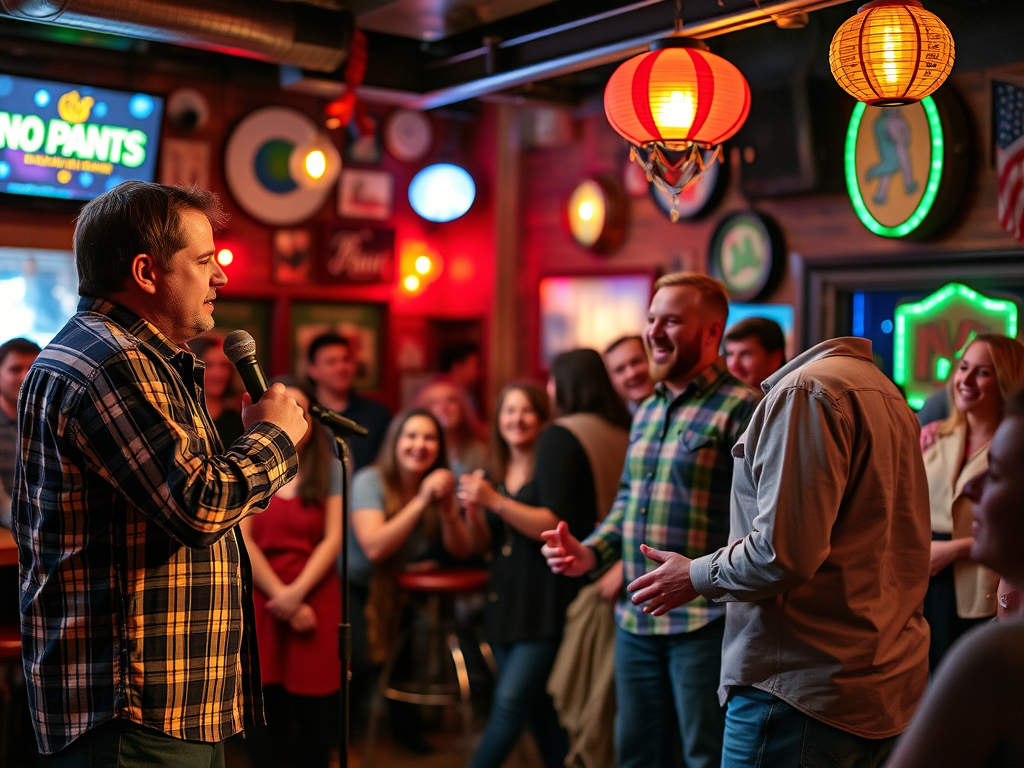
At the No Pants Players show in the Bar Louie at Mardis Gras Casino, Adam King joked and asked if I wanted to take the open fifth seat on stage with the troupe.
I fired back that I hadn’t taken the right drugs for that –in retrospect, a pretty lame comeback, but it was a bar.
“Oh, that’s no problem,” King said. “We got them right here.”
The improv rule: always agree, but add to it.
I demurred, slunk away, bought a beer, and took a seat way in the back of the very nice lounge. The last thing I wanted was to be called on stage.
The No Pants Players does that and the crowd in the bar was a little intimidating. They were drinking steadily and hungry for laughs. They’d have to be. A plethora of gambling opportunities awaited them barely 30 feet from their seats.
I figured at this point, whoever watched me perform, would need to keep the bar pretty low.
The No Pants Players, meanwhile, were hot. The crowd was receptive, responsive, and wildly vulgar –the perfect audience for the troupe’s no holds barred adult show. One of the best (and dirtiest) bits of the night involved the game of “Clue” and a murder that took place in emcee Lee Hale’s birthplace.
While watching, I wondered if there was more to this stuff than just going for laughs. It seemed like there ought to be. It turns out, there is.
My cousin Carissa has been following this “One Month at a Time” series online. She reached out over Facebook, and wrote, “You know I wrote my dissertation on improv –right? It’s wonderfully therapeutic.”
I told her no, I didn’t know. I’m lousy about keeping up with what anyone in my family does. I knew she did something related to psychology, but hearing from Carissa seemed strangely serendipitous.
Carissa is a therapist and counselor working in Detroit, Michigan. She has a Masters degree in Art Therapy and Counseling from Wayne State University, and is currently studying for her licensing exam.
After she passes that, she’ll be a fully licensed psychologist, with all the powers and benefits that imparts, but she also used to do improv theater in Detroit. She still would, if she could.
“A good friend of mine has a theater here,” she told me over the phone. “It’s just a couple of blocks away. I miss it, but bar hours are kind of hard for me these days.”
Carissa said she used improv as part of her work with inner city drug addicts and saw some specific benefits to it.
“One thing,” she said. “Improv can increase your memory. That’s something a lot of drug abusers have trouble with.”
One of the games she played with clients was a name game. Players paired their name with an adjective or a mood.
“I was always ‘Creative Carissa,’” she said. “Having the extra something to hold onto, to associate with the name helped create several neural pathways at once. So, if you looked across the circle and couldn’t remember a person’s name, you might remember the mood or adjective that went with it, which would bring you back to their name.”
While it was the farthest thing from scientific, Carissa said she could often tell how well someone would do in recovery based on what name they gave during this game. If they gave their street name instead of their real, given name, they seemed to have less of a chance at success.
“I think the people who were really willing to be vulnerable and put their given name out there, they were more likely to do the stuff they needed to do to get better. If they sticking with, ‘I’m this person off the street and my name is Cheeto,’ they weren’t as likely to follow through.”
Jokes are fine and fun, but Carissa said improv was more about honesty.
“The more honest you are, the funny comes out, and some point, you’ll hit upon something that resonates with the audience they’ll find funny.”
Improv, she added, could be a short course in bravery.
“It can be very good for self-esteem building and team building,” she said. “It can help with anxiety, which paradoxically, it can also cause a lot of anxiety initially.”
The complaint about my head hurting after my first workshop, she said, sounded perfectly normal.
“You probably weren’t used to trying to keep up with people that way, maybe ever,” she said.
The headaches had passed, but I couldn’t say that I felt differently, but a couple of weeks is a lot to ask for a noticeable change in anything. This wasn’t like a dietary change, where you see a difference because the pounds were melting off.
So, I talked to some of the people in the Improv 304 group, asked them what they’d gotten out of it.
Melissa Ellesworth said the reason she helped establish the improv practice group was part adding something cool to do in Charleston and part self-improvement for herself.
“I work in a law firm,” she said. “You see the lawyers go before a journey and they can fire stuff from off the cuff.”
She envied their ease in front of an audience and hoped improv would help make her a better public speaker.
After a year, she’s still working on it.
“But I think I’m a more compassionate person,” Ellesworth said. “I’m a better listener.”
Collaborating in improv not only encourages team building, she said, but it has helped her connect with other people, with humanity, in general.
“Anybody can be a ham,” she said. “It’s easy to talk, but it’s hard to listen, to really listen to what somebody else is saying.”
She said it was humbling. She thought improv had opened her heart up a little more.
Nick said one of the great things about improv comedy is that it provides the opportunity to fail.
“I think there’s a lot of pressure on people to always succeed,” he said. “With improv, it’s OK to fail.”
Nick pointed out that jokes in workshop often fall flat or the scene doesn’t go anywhere. Things stay messy, but that’s fine.
It’s a little like practicing shooting a basketball, he thought. The focus isn’t on the baskets you miss, but the ones you make. The work is always to make more baskets, not miss less.

 Small Town Famous
Leave a comment